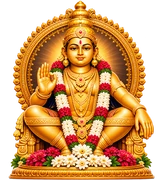
A guided framework for Ayyappa home worship during Deeksha, from lighting the lamp to the concluding Saranam.
Ayyappa Nitya Pooja Vidhanam
Morning Nitya Pooja — Traditional Short Version
Staging review guide. The prayer text requires verification against the Telugu booklet, republication clearance and Guru Swamy approval. Use your approved prayer book for recitation.
Materials checklistReading options
0 of 13 sections reviewed
Full mantra list and ritual outline
Prepare the Ganesha image and ask about approved powders, flowers, Durva and offerings. The source outline identifies Shuklambaradharam, Agajanana Padmarkam, Vakratunda Mahakaya, Gananaam Tva and a Telugu prayer. Follow the original booklet for the verified order and actions.
Prayer text awaiting review · 5 source entries expected.
The booklet identifies this section as the 16 sacred names of Ganesha. Follow your Guru Swamy’s instructions for flower offerings while reciting.
Prayer text awaiting review · 16 source entries expected.
Guru Prarthana expresses gratitude for guidance in the Vratham. Preserve its place among the opening prayers on the original page, including Sharavanabhava, Jnana Shakti Dhara and Subrahmanyaya Namah. Ask about suitable flowers and offerings for Subrahmanya.
Prayer text awaiting review · 4 source entries expected.
The booklet identifies this section as the 16 sacred names of Subrahmanya. Offer flowers as directed by your Guru Swamy.
Prayer text awaiting review · 16 source entries expected.
Prepare the approved Ayyappa image or idol with a clear view of Chinmudra. The source outline identifies a threefold Hariharaputra invocation. Follow your reviewed booklet for the wording and timing.
Prayer text awaiting review · 1 source entries expected.
Anga Pooja associates individual invocations with sacred body parts. Ask Guru Swamy where to direct each offering or gesture. Exact body-part order and visual indicators depend on verification against the original pages.
Prayer text awaiting review.
The source outline places the Dhyana Sloka before the Ayyappa Ashtottaram.
Prayer text awaiting review · 1 source entries expected.
The 108 sacred names of Ayyappa are a distinct recitation with its own counter.
Prayer text awaiting review · 108 source entries expected.
Saranaghosha is a separate series of invocations of refuge. Preserve the order, including the ending invocation that follows the 108 entries.
Prayer text awaiting review · 108 source entries expected.
The source outline specifies a threefold concluding invocation after Saranaghosha.
Prayer text awaiting review · 1 source entries expected.
Follow the booklet’s concluding slokas and Namaskara prayers in their original order.
Prayer text awaiting review.
Harathi offers light as part of the concluding worship. Use the prayer and movements taught by Guru Swamy.
Prayer text awaiting review.
The booklet’s forgiveness prayer gives devotees time to acknowledge errors and end worship with humility.
Prayer text awaiting review · 1 source entries expected.
Section 1 of 13
Sri Vighneswara Nitya Pooja
Prepare the Ganesha image and ask about approved powders, flowers, Durva and offerings. The source outline identifies Shuklambaradharam, Agajanana Padmarkam, Vakratunda Mahakaya, Gananaam Tva and a Telugu prayer. Follow the original booklet for the verified order and actions.
Prayer text awaiting review · 5 source entries expected.
Morning Nitya Pooja — Traditional Short Version
Staging review outline. Use the Guru Swamy-approved booklet for prayer text.
☐ Clean worship surface and approved deity images
☐ Fresh flowers and garlands
☐ Lamp, cotton wicks and suitable oil or ghee
☐ Heat-resistant tray, lighter and lamp snuffer
☐ Clean offering plates, vessels and drinking water
☐ Fresh fruit or Satvic food
☐ Approved sacred powders and incense, where used
☐ Pooja booklet approved by your Guru Swamy
Sri Vighneswara Nitya Pooja
Prepare the Ganesha image and ask about approved powders, flowers, Durva and offerings. The source outline identifies Shuklambaradharam, Agajanana Padmarkam, Vakratunda Mahakaya, Gananaam Tva and a Telugu prayer. Follow the original booklet for the verified order and actions.
Prayer text awaiting review.
Ganesha Shodasha Namavali
The booklet identifies this section as the 16 sacred names of Ganesha. Follow your Guru Swamy’s instructions for flower offerings while reciting.
Prayer text awaiting review.
Guru Prarthana and Sri Subrahmanya Swamy Pooja
Guru Prarthana expresses gratitude for guidance in the Vratham. Preserve its place among the opening prayers on the original page, including Sharavanabhava, Jnana Shakti Dhara and Subrahmanyaya Namah. Ask about suitable flowers and offerings for Subrahmanya.
Prayer text awaiting review.
Subrahmanya Shodasha Namavali
The booklet identifies this section as the 16 sacred names of Subrahmanya. Offer flowers as directed by your Guru Swamy.
Prayer text awaiting review.
Sri Ayyappa Swamy invocation
Prepare the approved Ayyappa image or idol with a clear view of Chinmudra. The source outline identifies a threefold Hariharaputra invocation. Follow your reviewed booklet for the wording and timing.
Prayer text awaiting review.
Ayyappa Anga Pooja
Anga Pooja associates individual invocations with sacred body parts. Ask Guru Swamy where to direct each offering or gesture. Exact body-part order and visual indicators depend on verification against the original pages.
Prayer text awaiting review.
Ayyappa Dhyana Sloka
The source outline places the Dhyana Sloka before the Ayyappa Ashtottaram.
Prayer text awaiting review.
Ayyappa Ashtottara Shatanamavali
The 108 sacred names of Ayyappa are a distinct recitation with its own counter.
Prayer text awaiting review.
108 Ayyappa Saranaghosha
Saranaghosha is a separate series of invocations of refuge. Preserve the order, including the ending invocation that follows the 108 entries.
Prayer text awaiting review.
Saranaghosha concluding invocation
The source outline specifies a threefold concluding invocation after Saranaghosha.
Prayer text awaiting review.
Bhoothanatha Pancharatnam and Namaskara Slokas
Follow the booklet’s concluding slokas and Namaskara prayers in their original order.
Prayer text awaiting review.
Harathi
Harathi offers light as part of the concluding worship. Use the prayer and movements taught by Guru Swamy.
Prayer text awaiting review.
Kshamapana
The booklet’s forgiveness prayer gives devotees time to acknowledge errors and end worship with humility.
Prayer text awaiting review.
01
Set aside a place and time
Build a pooja routine around the worship your Guruswamy teaches. A morning or evening home session can give structure to Deeksha even on days without a community event. Start with a clean surface, the approved image or murti your household uses, a cloth, flowers or fruit, and vessels for the offerings you have agreed to make. Keep the space stable and safely separated from people moving through the room. Ask who can participate and which parts a priest or experienced leader should guide.
Deepa Prajwalana is the lighting of the lamp. If a live flame is permitted, prepare the wick and fuel in advance, put the lamp on a heat-safe base and make sure an adult remains with it. Agree on a way to begin prayer when open flames are unsuitable. Many Telugu worship sequences begin with a prayer to Ganesha. Some families also remember Subrahmanya or their family deity at the opening. Learn the order and words your tradition uses from its leader.
Sankalpam states the intention of the pooja. In an observance, the intention may include completing the Vratham and undertaking the pilgrimage when planned. Speak with your guide about what is appropriate for your actual commitment. Formal sequences may include water, a kalasham or additional preparations before the principal worship. Set out the agreed vessels and ask which of these are appropriate for a daily home session, particularly if you are learning for the first time.
Follow the leader's teaching for welcoming and worshipping Lord Ayyappa. Flowers, water and other offerings may be presented in the order your tradition uses. Ashtottaram often refers to reciting 108 divine names. If your group includes it, learn the names and pronunciation from a verified version and ask who leads the response. A shorter practice might use the names or invocation your guide has taught, followed by a bhajan. The home sequence can be sustained through steady attention rather than by adding steps you have not learned.
Offer the agreed food at the appropriate point in the pooja, keeping separate what will later be served. Naivedyam can be as simple as fruit if the leader approves. Harathi, where customary, is the offering of light. The person holding a flame should have room to move safely. Use the morning or evening guide above for the corresponding closing prayers. Put out flames before leaving and handle offerings as directed.
Learn the order from someone who can demonstrate it
If you are unsure where a step belongs, ask a leader to demonstrate the sequence in one session. Pay attention to who speaks, when others respond and how items are passed safely. You might prepare one card with the order in your own words and keep an authorized text separately. If a step is new, ask whether you should observe it first. This is particularly helpful when a fuller weekend worship includes several participants who each bring an offering.
On a workday, set out a flower, water and the agreed lamp in advance. Use the short sequence your guide has given, and have your evening time available for a fuller session. On a weekend a household may pray together, sing a bhajan and share prasadam after the closing prayer. Someone can set out chairs and keep pathways clear while the worship leader prepares the offerings. Ask which portions your children can join and what to do if a family commitment changes the timing.
A home pooja can also continue respectfully while traveling. Confirm how you may pray without a flame or a permanent altar and choose a quiet moment where the prayer will not inconvenience others. Keep a copy of authorized prayers on your device if network access is uncertain. If a session is interrupted by illness or care for another person, attend to the situation and ask your guide how to resume.
Sabarimala pilgrimage chants
Some pilgrim groups use call and response. Listen to the leader and follow the response taught by your Guru Swamy for the occasion. The booklet’s pilgrimage chant text is awaiting verification and clearance.
Preparation tasks
0 of 3 items checked
Selections are kept in this browser.
Frequently asked questions
Can I pray during travel without an oil lamp?
Choose a quiet setting and use the practice your group approves when flames are unavailable. Follow the venue rules for smoke and open flames.
Should every home worship include the complete Ashtottaram?
Ask which form your group follows and whether it teaches a shorter daily version. Use verified wording and pronunciation for the version you learn.
When should I offer or share the food?
Offer Naivedyam at the place in the sequence that your guide teaches. Ask when it can be shared as prasadam.